
What Is a Micro-Rotor Watch—and Why Lobinni’s Version Is Turning Heads

If you’ve spent any time around watch enthusiasts, you’ve probably heard micro-rotors mentioned with the kind of tone usually reserved for rare engines, vintage guitars, or anything else that feels “secretly elite.”
Micro-rotor watches have that reputation for a reason.
For decades, micro-rotors lived mostly in the world of ultra-thin luxury watchmaking—a niche where movements are engineered like sculpture, and price tags tend to climb fast. You didn’t see micro-rotors everywhere because the architecture is harder (and typically more expensive) to do well than a standard automatic setup.
But over the past few years, something shifted.
The micro-rotor “entry price” started dropping, and suddenly people who would never spend five figures on a dress watch began owning micro-rotor pieces. That change didn’t happen by accident. It happened because new movement supply chains and new manufacturers made micro-rotor engineering available at a wider range of price points.
This is where Lobinni comes in.
The reason Lobinni’s micro-rotor watches are turning heads isn’t just that they look good (they do). It’s that they deliver a very specific kind of enthusiast satisfaction: the combination of slim automatic wearability, micro-rotor movement architecture, and the “flip-it-over-and-stare” caseback experience that, until recently, was mostly reserved for watches in a completely different league.
This article will break down:
- what a micro-rotor actually is (in plain language)
- why it became a luxury hallmark in the first place
- what tradeoffs come with the design
- why Lobinni’s take is so popular right now
- how to choose the right micro-rotor watch for your style and lifestyle
By the end, you’ll know whether micro-rotor is just a buzzword… or the smartest upgrade you can make if you’re chasing that “quiet luxury” feel.
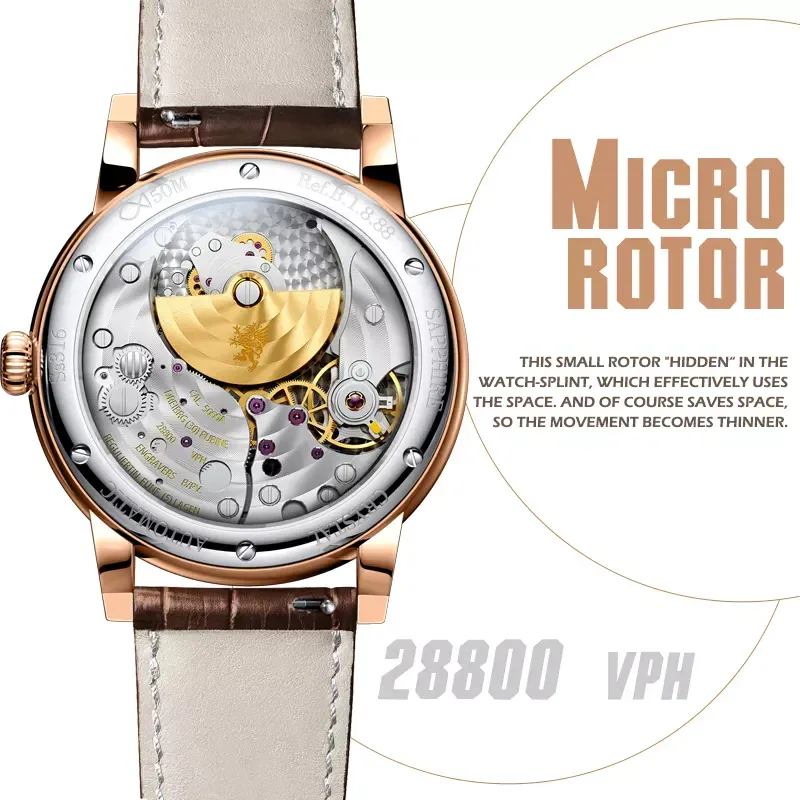
Table of Contents
The simple definition: what is a micro-rotor watch?
A micro-rotor watch is an automatic mechanical watch that winds itself using a smaller, recessed rotor (the spinning weight) that is integrated into the movement’s plane rather than sitting above it.
That one detail changes everything.
In a standard automatic movement, the rotor is typically a large semi-circular weight that rotates on top of the movement. It’s efficient, reliable, and common—but it adds thickness because you’re stacking parts vertically.
A micro-rotor movement takes a different route:
- the rotor is smaller
- it sits within the movement rather than on top of it
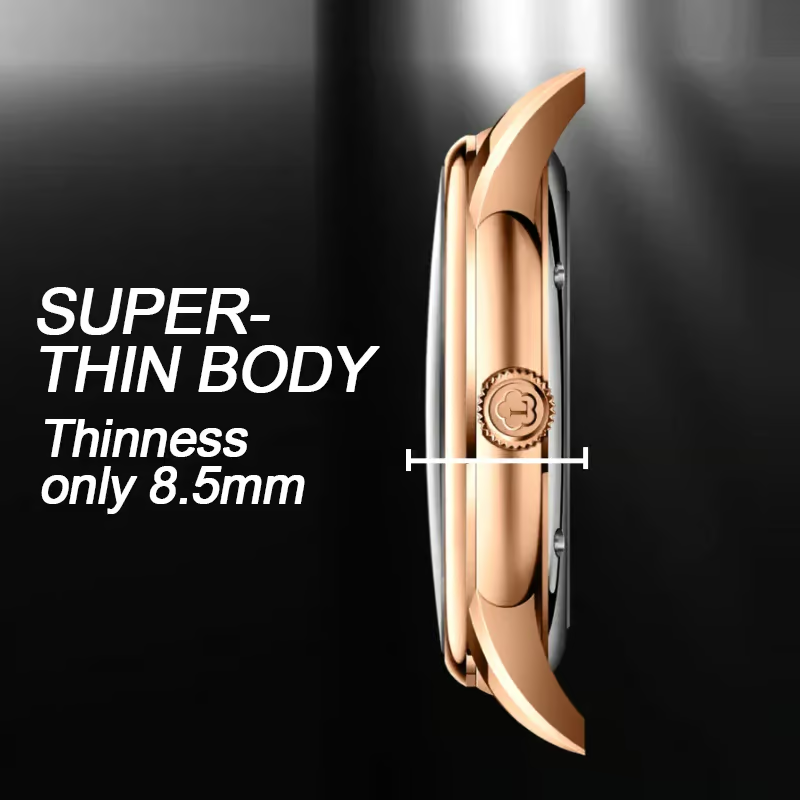
- the movement can be made slimmer
- and therefore the watch can be thinner
So micro-rotor isn’t just “a different rotor.” It’s an architectural choice—one that’s heavily associated with elegance, dress watches, and thinness.
Why micro-rotors look different (and why enthusiasts love that)
Because the rotor is smaller and partially recessed, it doesn’t cover half the movement when you look through the caseback. You often get:
- a more open view of the bridges
- a more “mechanical” layout
- a sense that the movement is part of the watch’s identity, not something hidden behind a big spinning plate
In short: micro-rotor watches are as much about engineering aesthetics as they are about winding.
Why micro-rotor watches were historically rare (and expensive)
Micro-rotor architecture became famous because it solved a problem that luxury watchmakers care about deeply:
How do you keep an automatic watch thin without giving up the convenience of automatic winding?
The old-school answer was “make it manual wind.” Manual watches can be extremely thin because there’s no rotor system at all.
But for an automatic, the rotor system usually adds height. Micro-rotor movements were created to make automatic winding compatible with ultra-thin design.
The tradeoff: slimness vs winding efficiency
There’s no free lunch in mechanics.
A standard rotor has a big advantage: size. The larger the rotor and the wider its swing, the more inertia it can generate, and the more efficiently it can convert wrist motion into winding power.
A micro-rotor is smaller, so it can be:
- less efficient at winding (depending on design/materials)
- more sensitive to how active you are
- more dependent on hand-winding if you’re sedentary
High-end brands often used dense metals (like gold) and refined gearing to maximize efficiency and performance.
That engineering—and the finishing expectations that came with it—is a big reason micro-rotors stayed in the luxury world for so long.
The micro-rotor “feel”: why thinness changes your daily experience
If you’ve never worn a slim watch, it can be hard to understand why enthusiasts obsess over a few millimeters.
But thinness changes everything you feel day-to-day:
1) It disappears under a cuff
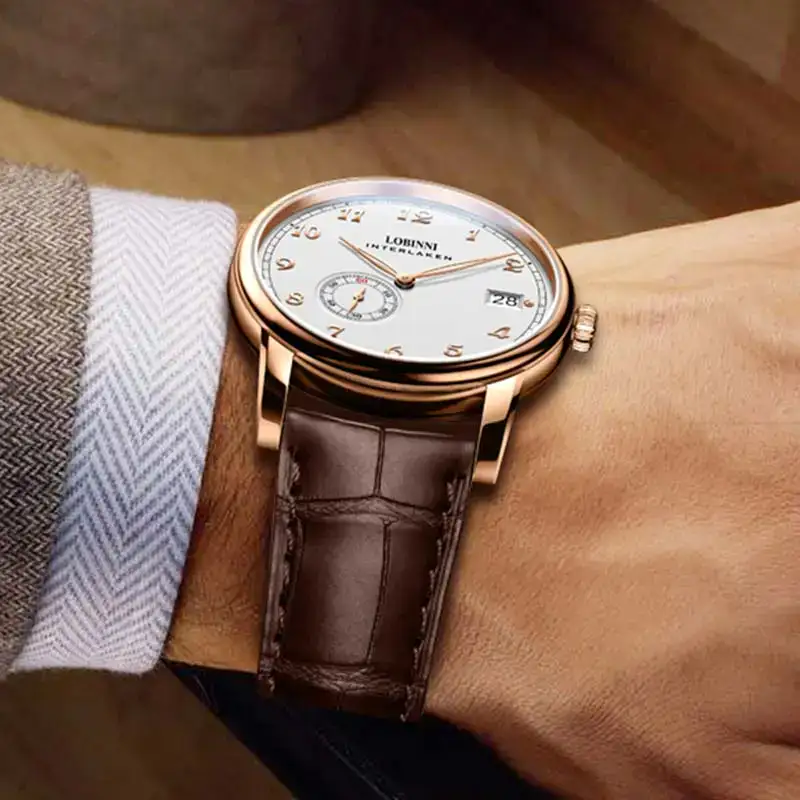
A thick watch can catch on sleeves and feel bulky. A slim watch slides under effortlessly, which instantly reads as “dressy” and refined.
2) It sits flatter and feels more natural
Slim watches often feel like part of your wrist rather than something sitting on top of it. You stop adjusting it. You stop noticing it.
3) It elevates your style without looking like it’s trying
This is the “quiet luxury” effect. A thin watch looks deliberate. It doesn’t shout. It signals taste rather than attention-seeking.
4) It makes you enjoy the watch more often
When a watch is comfortable, you wear it more. When you wear it more, it becomes part of your identity, not just part of your collection.
This is one of the biggest reasons micro-rotor watches are so attractive. They’re not just technically interesting—they’re pleasant.
How to spot a true micro-rotor watch (and avoid marketing nonsense)
“Micro-rotor” has become trendy enough that some sellers use vague terms like:
- mini-rotor
- micro automatic
- slim rotor
- compact rotor
So if you want to be sure you’re getting the real thing, look for these signals:
Display caseback
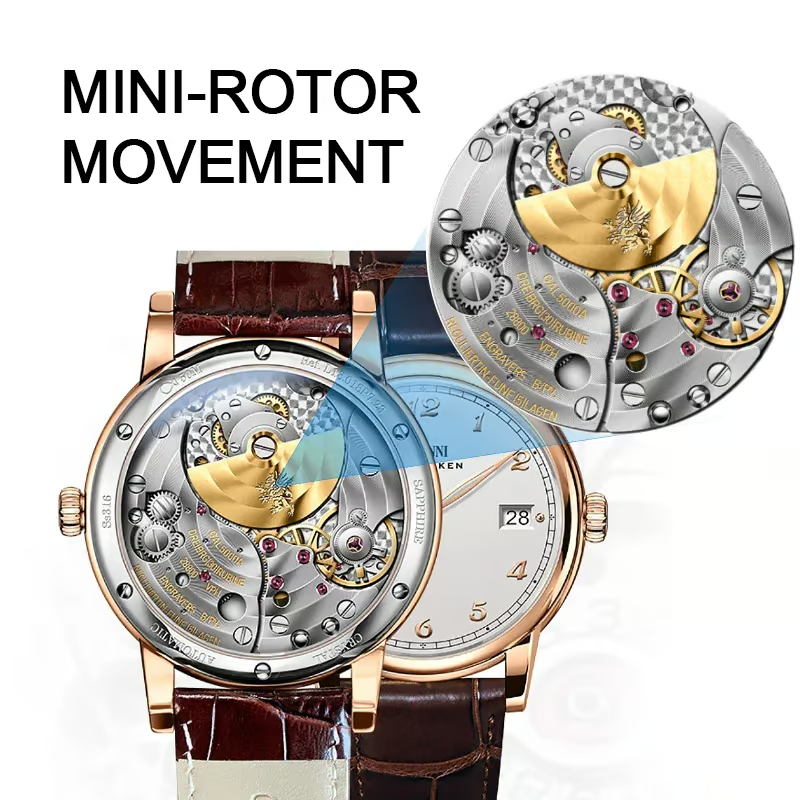
Most micro-rotor watches want you to see the movement because the rotor is part of the appeal.
Rotor positioned off-center and partially recessed
Instead of covering the movement like a big semicircle, a micro-rotor looks like a smaller disc set into the movement’s structure.
Movement identification (if provided)
The best product pages identify the caliber. If the seller won’t name the movement at all, that’s a mild red flag.
Thin case profile
Micro-rotor architecture is usually chosen for thinness. If a “micro-rotor” watch is still thick like a dive watch, something doesn’t add up.
Why Lobinni’s micro-rotor watches are turning heads right now
Now we get to the real question:
Why this brand? Why now? Why is everyone talking about Lobinni in micro-rotor circles?
Because Lobinni hits a rare intersection that watch enthusiasts love:
1) Micro-rotor novelty at an accessible price
Micro-rotors are still uncommon. Even today, most micro-rotor watches cost significantly more than “normal automatic” watches.
Lobinni offers the micro-rotor experience at a price that feels… almost suspicious if you’re used to how micro-rotors were historically priced.
That’s why collectors pay attention. It’s a category disruptor.
2) A slim dress-watch profile that actually wears beautifully
Micro-rotor isn’t valuable if the watch still wears chunky.
Lobinni’s micro-rotor models typically emphasize:
- slim case proportions
- cuff-friendly thickness
- smooth polished surfaces
- comfortable lug-to-lug sizing
Even people who nitpick the details often admit the same thing:
It wears really well.
And wearability is what makes an affordable watch feel like a smart buy rather than a novelty purchase.
3) A dial design that rewards “close attention”
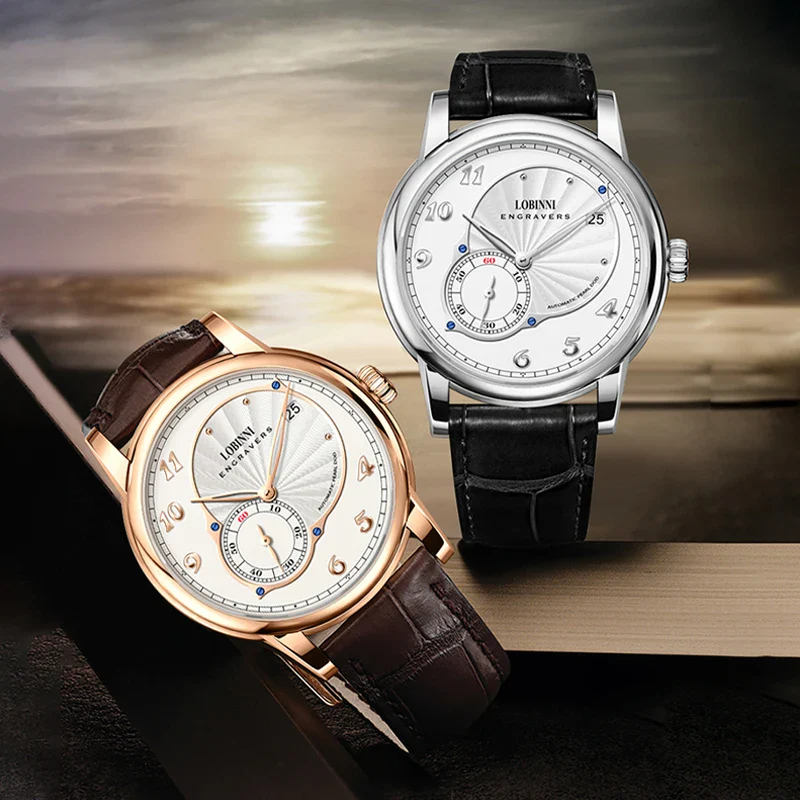
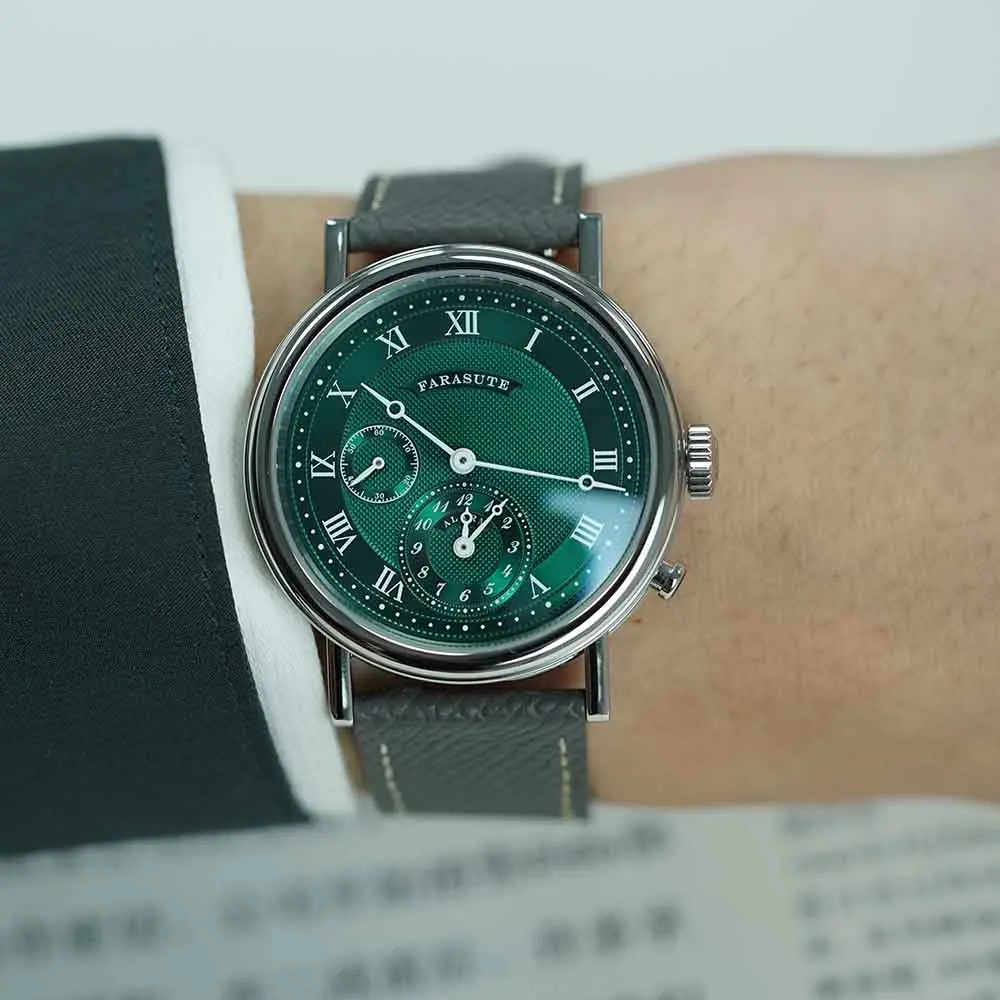
Lobinni micro-rotor designs tend to lean into vintage dress cues:
- stylized numerals
- leaf hands
- small seconds
- subtle track markings
In the right lighting, these dials can look shockingly expensive for the money. They don’t look like generic mall watches. They look like someone actually cared.
4) The caseback is legitimately fun
This matters more than people admit.
A micro-rotor watch is the kind of watch you turn over on your desk. It’s the kind of watch you show a friend who says, “Wait, what is that rotor doing down there?”
For enthusiasts, that “movement enjoyment” is a real part of the value.
The honest truth: what Lobinni gets right (and where it compromises)
To understand why Lobinni turns heads, you also need to understand why it sparks debate.
Because when a watch delivers a rare feature at a low price, people naturally ask:
“What did they sacrifice to get here?”
Here’s the balanced view.
Where Lobinni micro-rotor watches shine
Thinness and comfort
The watch sits slim, wears light, and feels refined.
Movement presence
Even if you’re not a movement nerd, the micro-rotor layout is visually satisfying.
Design coherence
The dial, hands, numerals, and case finishing typically align with a dress-watch identity.
“Looks more expensive than it is” moments
In the right lighting and with the right strap, it can punch above its weight visually.
Where the compromises usually appear
Strap quality
This is common at lower prices. Many owners replace the strap immediately, and the watch transforms.
Reflections / lack of anti-reflective coating
Domed sapphire can reflect heavily. That can hurt legibility and make the dial “disappear” in some angles.
Branding choices
Some models lean into Swiss-sounding cues (like place names), which can feel unnecessary. The watch would arguably be stronger with simpler branding.
Date window debates
On some variants, the date window interrupts the vintage dress dial symmetry. Some people like it; purists want it gone.
These aren’t dealbreakers for everyone. But they’re real, and acknowledging them is part of buying smart.
Why micro-rotor watches feel like “insider” pieces
There are watches that are designed to get attention from everyone.
And there are watches that get attention from watch people.
Micro-rotor watches are in the second category.
Most non-enthusiasts won’t know what micro-rotor means. They’ll just see a slim elegant watch.
But enthusiasts recognize the architecture immediately.
Micro-rotor signals a specific kind of taste
It often signals:
- appreciation for movement design
- preference for thinness and refinement
- interest in “how it’s made” not just “how it looks”
- quiet confidence rather than loud status
That’s why people who buy micro-rotors often describe them as satisfying even when the watch isn’t perfect.
The watch feels like it has a point. It has a reason to exist.
Is a Lobinni micro-rotor a “good first mechanical watch”?
It can be—if you buy it for the right reasons.
It’s a great first mechanical watch if you want:
- a dress watch that feels refined
- a slim automatic that’s easy to wear daily
- a mechanical piece that feels interesting without being complicated
- something that introduces you to movement appreciation
It’s not ideal as your first mechanical watch if:
- you want maximum readability in all lighting
- you want one watch to do everything (sports, swimming, rough wear)
- you want the most rugged, service-friendly “tool watch” platform
Micro-rotor dress watches are best as “elegance pieces,” not “beaters.”
Think: office, dinner, events, smart casual days.
How to choose the right Lobinni micro-rotor variant for your style
If you’re shopping the Lobinni micro-rotor category, your best decision isn’t “Which is the best one?”
It’s: Which one fits my life and wardrobe?
Here’s a simple style framework:
If you wear mostly black/grey/monochrome
Choose:
- grey dial + silver case
- black strap replacement (matte or lightly textured)
This gives you a modern, minimalist, business-ready look.
If you wear navy, brown, earth tones, denim
Choose:
- lighter dials (silver/white) or warm-toned variants
- brown leather or suede strap
This creates a softer vintage-luxury vibe.
If you want maximum “dress watch” formality
Choose:
- the cleanest dial variant (less visual clutter)
- a high-quality black leather strap
- keep it polished and simple
If you want the most “wow” moments
Pick the dial color that catches light best for you and prioritize the caseback experience.
Then upgrade the strap immediately.
(Seriously: straps are the cheat code.)
One practical upgrade that makes the Lobinni micro-rotor feel twice as expensive
If you do just one thing:
Replace the strap.
Even a decent mid-priced strap can transform how the watch wears and how it feels in the hand.
What to look for:
- soft, compliant leather (comfort matters)
- matte finish (pairs better with polished cases)
- 20mm width (common, easy to find)
- quick-release if you like swapping often
When you pair a slim polished micro-rotor watch with a strap that looks intentional, people start asking questions.
Not because it’s loud.
Because it looks correct.
FAQ: Micro-Rotor Watches & Lobinni
What is a micro-rotor watch?
A micro-rotor watch is an automatic mechanical watch that uses a smaller, recessed rotor integrated into the movement, allowing for a thinner case and a more open view of the mechanics.
Are micro-rotor watches better than regular automatic watches?
Micro-rotor watches are not “better” in every way, but they excel in thinness, elegance, and movement aesthetics. Standard automatic watches usually wind more efficiently, while micro-rotors prioritize slim design and refinement.
Why are micro-rotor watches usually expensive?
Micro-rotor movements are more complex to engineer and traditionally required high-end materials and finishing. This is why they were historically found in luxury brands and higher price ranges.
Is a Lobinni micro-rotor watch worth buying?
A Lobinni micro-rotor watch is worth considering if you want a slim automatic dress watch with micro-rotor architecture at a more accessible price. It offers strong wearability and visual appeal, with some expected compromises in strap quality and finishing.
Do micro-rotor watches wind less efficiently?
Yes, micro-rotor watches can be slightly less efficient at winding than standard automatics due to the smaller rotor size. However, modern designs—including Lobinni’s—balance this with improved gearing and occasional hand-winding.
Is a micro-rotor watch good for everyday wear?
Micro-rotor watches are ideal for office wear, smart casual outfits, and formal occasions. They are not designed as rugged tool watches and are best suited for refined daily use rather than heavy sports or diving.
How can I make a Lobinni micro-rotor feel more premium?
The easiest upgrade is replacing the factory strap with a higher-quality leather strap. This significantly improves comfort, appearance, and the overall wearing experience.
Why jwlraddicts.com is a smart place to explore Lobinni micro-rotor watches
Buying a micro-rotor watch isn’t like buying a basic quartz fashion watch. People want:
- clarity about what they’re getting
- real-world perspective
- styling guidance
- and a store that understands the niche
At jwlraddicts.com, the goal is simple:
make “luxury feel” accessible without hiding the reality.
That means helping you buy for your lifestyle:
- slimness and comfort for daily wear
- classic design cues that don’t age fast
- mechanical interest you can actually enjoy
- honest expectations about what the watch is (and what it isn’t)
If you’re micro-rotor curious, this is a category worth exploring carefully. And Lobinni is one of the most interesting doorways into that world.
Final thoughts: Why Lobinni’s micro-rotor is trending (in one sentence)
Because it gives you the experience that micro-rotor lovers chase—thin automatic elegance + a movement worth looking at—at a price point that forces people to take it seriously.
If you’ve ever wanted a watch that whispers “I know what I’m wearing,” a micro-rotor is one of the cleanest ways to do it.
And Lobinni’s version is turning heads because it brings that whisper within reach.
Explore Lobinni micro-rotor watches on jwlraddicts.com, pick the variant that matches your wardrobe, and don’t forget the strap swap—it’s the fastest upgrade you’ll ever make.








Leave a comment
You must be logged in to post a comment.