
Why “Genuine Leather” Belts Fail — And How Long a Good Belt Should Actually Last
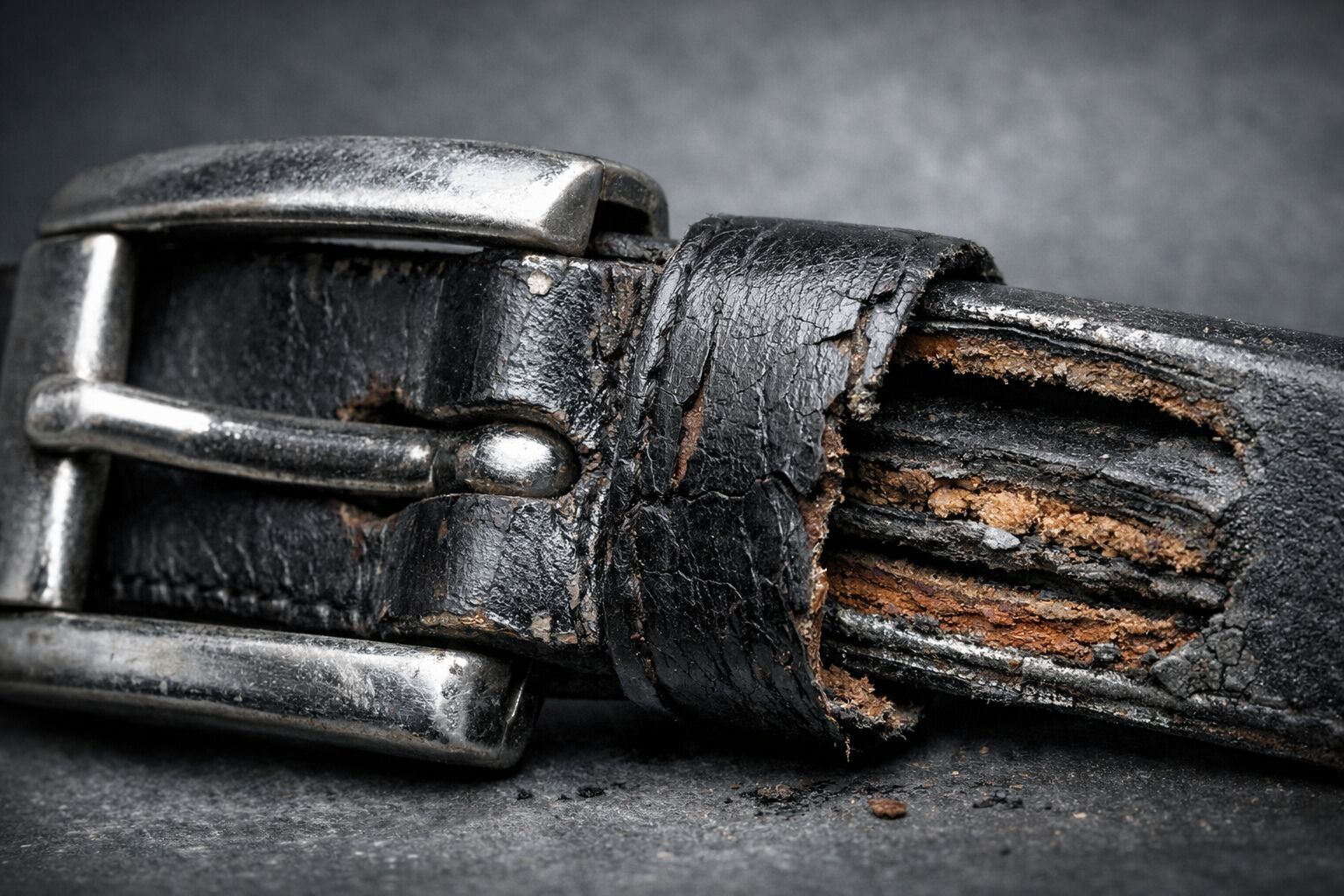
Most men who care about watches understand that a movement’s longevity comes from how it’s built, not what the marketing says. The same logic applies to belts — but almost no one applies it.
A belt labeled “genuine leather” can fall apart in six months. A belt with no brand name and no fancy packaging can last ten years. The difference has nothing to do with the label and everything to do with construction.
Here is the honest breakdown: why belts fail, what the failure points actually are, and what to look for if you want a belt that stops being something you think about.
“Genuine Leather” Is Not a Quality Grade — It’s a Legal Minimum
This is the most important thing to understand before buying any belt.
In most markets, “genuine leather” is the lowest recognized grade of leather — not a mark of quality, but a legal floor that means the product contains some amount of real leather. It tells you almost nothing about how the belt is built or how long it will last.
The leather grades, from highest to lowest, are:
Full-grain leather is cut from the outermost layer of the hide with the grain intact. It is the densest, most durable grade. It resists stretching, develops a patina over time, and does not peel because the surface is the actual leather surface — not a coating applied on top of something cheaper.
Top-grain leather has the outer layer sanded down to remove blemishes, then a finish coat is applied. More uniform in appearance than full-grain, but less durable. The sanding removes the tightest fiber structure, which is where most of the strength lives.
Split leather is the lower section of the hide, separated from the grain layer during splitting. Much weaker fiber structure. Often used as a base layer in layered belt construction with a polyurethane coating applied to the surface to simulate full-grain appearance.
Bonded leather is leather scraps and dust bound together with adhesive and a backing. Technically contains leather. Structurally, it is closer to cardboard. Belts made from bonded leather do not fail over years — they fail over months.
Most mass-market belts at mid-range prices use split or bonded leather with a coating finish. They look identical to full-grain belts in product photography. They do not perform identically under daily wear.
The full breakdown of leather grades and what they mean for belt longevity at HoldForm covers the material science in detail if you want to go deeper before buying.
How Long Should a Leather Belt Actually Last?
A well-built belt — single-piece full-grain leather, solid hardware, correct thickness — worn daily should last between 8 and 12 years before meaningful degradation. With proper care and rotation, longer.
A bonded or split leather belt with plated hardware, worn daily, typically shows visible failure within 6 to 18 months.
The gap between those two outcomes is not price. It is construction. There are expensive belts built with poor materials and inexpensive belts built with honest ones. Knowing the difference before you buy is the only reliable way to stop replacing belts on a cycle.
The Four Specific Failure Points in Most Belts
1. Layered construction that delaminates
Most belts are not a single piece of leather. They are built from multiple layers — a cheap base, a filler core, sometimes cardboard, with a surface layer glued on top to create the appearance of a solid strap.
Every layer represents a glue joint. Every glue joint is a potential failure point. When adhesive breaks down under the heat, sweat, and tension of daily wear, the layers separate. Once separation starts at one point, it spreads. The belt is finished.
A single-piece full-grain belt has no internal layers and no glue joints. There is nothing to delaminate. The fiber structure runs continuously from front to back through the full thickness of the strap. This is why solid single-piece construction is the most important thing to verify when buying a belt intended for long-term use.
HoldForm’s leather belt care and longevity guide explains how to maintain a belt once you have a good one — and how the care requirements differ between layered and single-piece construction.
2. Hole deformation and cracking at the buckle point
In a traditional pin-buckle belt, every tension load is concentrated at one point: the hole where the pin rests. Every time the belt is worn and removed, the pin applies lateral force against the leather fibre at the hole edge. Sit down and the waistband tightens — more force at the same point. Walk and the motion transfers repeated tension to the same area.
This is localized fibre failure, not leather stretching. The leather in the rest of the strap is structurally intact. The hole edge fails because the full tension of the belt is channelled through a small area instead of distributed across the strap width.
On full-grain leather at 4mm thickness, this process is slow — the dense fibre structure resists it for years. On thinner or lower-grade leather, hole deformation can be visible within months. The detailed mechanical explanation of why belt holes deform at HoldForm covers the three-stage failure progression clearly.
Ratchet systems eliminate this failure mode entirely by replacing punched holes with a concealed track. There is no single stress concentration point because tension is distributed across the mechanism rather than a specific hole in the leather. This is the primary structural advantage of a ratchet belt for daily wear — not convenience, but longevity of the leather. HoldForm’s guide to choosing between ratchet and classic belts explains when each type is the right call.
3. Stitching failure at the edges
Stitching looks reassuring — it signals craftsmanship. In practice, it is often where belts break first.
Thread ages faster than leather. Stitch holes punch through the leather edge and create a line of micro-perforations where stress concentrates. Under tension and repeated flexing, thread frays and holes in the leather edge connect and tear. This is especially common in belts worn daily with jeans or workwear where the constant movement creates repeated flex cycles.
Heritage and military belts avoided stitching for a reason: a no-stitch, solid-strap belt distributes stress evenly across the full width of the leather rather than channelling it through a line of edge perforations.
4. Hardware that fails before the leather does
Even when the leather is solid, most belts die at the buckle.
Plated buckles — zinc alloy with an electroplated surface finish — look correct at purchase. The plating chips under daily contact with belt loops, hands, and waistbands. Once the base metal is exposed, corrosion follows at the contact points. Buckle frames bend under sustained load because the alloy is too soft. Locking mechanisms in ratchet systems wear out because the teeth are too small or the spring tension is insufficient.
A solid brass or solid steel buckle does not peel, chip, or corrode in the same way. The material integrity is consistent from surface to core. This is why buckle material — not appearance — is the variable that determines whether a belt outlasts its strap or fails first.
For a full explanation of buckle materials and which finishes hold up under real daily wear, HoldForm’s guide to belt buckle types and closure mechanisms covers the engineering behind each option. The silver, gold, and black buckle guide adds the matching logic for coordination with watches and shoes.
Why Thickness Determines Whether a Belt Lasts
Thickness is the variable most buyers ignore and most manufacturers underspecify because thinner belts are cheaper to produce.
A belt under 3mm will roll, twist, and permanently deform under daily tension. It is an accessory built for appearance, not repetition.
Around 4mm is the minimum for a belt you expect to last. At this thickness, full-grain leather resists the constant low-level tension of keeping trousers in place without deforming its profile. The strap holds flat, maintains its shape through wear, and does not collapse at the buckle point.
5mm is where a belt stops being an accessory and becomes equipment — the specification for work belts, tool carry, and heavy daily use. At this thickness, the leather resists rolling under load, supports hardware weight without sagging, and survives the kind of use that destroys thinner straps within a season.
HoldForm’s guide on how thick a leather belt should be explains the mechanics of each thickness range and when each is appropriate. For everyday office and daily wear, they cover the full construction logic in the best everyday leather belt guide.
What to Actually Check Before Buying
These are the four things that determine whether a belt lasts:
Construction. Single-piece leather, not layered. Ask specifically — “single-piece full-grain” is the correct answer. “Genuine leather” tells you nothing useful.
Thickness. 4mm minimum for daily wear. 5mm for heavy use, jeans, or workwear. The HoldForm belt thickness guide covers why thickness matters mechanically, not just for feel.
Hardware. Solid brass, stainless steel, or PVD-coated zinc alloy that is rated for daily mechanical load. Electroplated finishes over soft alloy will chip. The buckle should feel heavy for its size — a light buckle is almost always a sign of hollowed-out construction.
Fit system. Pin-buckle or ratchet both work when built correctly. Ratchet systems eliminate hole deformation and distribute tension more evenly. Classic pin-buckle belts are simpler and develop more natural patina over years. The choice depends on use — HoldForm’s ratchet vs. classic belt guide makes the trade-offs clear.
For office and smart-casual wear specifically, HoldForm’s best belt for office wear guide covers how to match construction to professional context.
What Good Looks Like
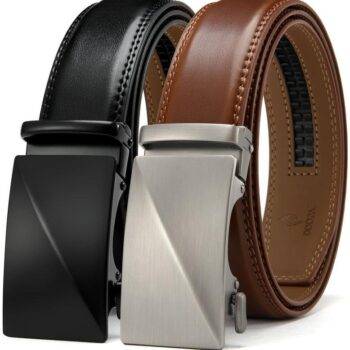
The HoldForm ratchet belt range is built around single-piece cowhide at 3.5–4.5mm with high-density zinc alloy buckles cycle-tested to 10,000+ clicks. Their executive leather range uses 5mm full-grain for daily professional wear. The hidden-tail series adds concealed strap architecture for formal and office contexts where a clean waistline matters.
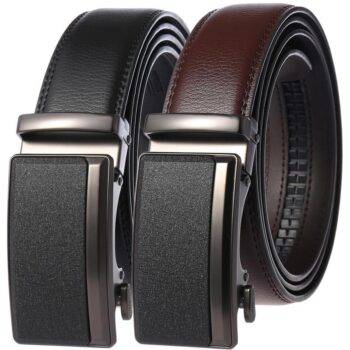
At Jewelry Addicts, the genuine leather automatic buckle belt and the famous brand leather ratchet belt are solid options at accessible price points. The full men’s belts category covers the complete range if you want to compare options.
For sizing before you buy, HoldForm’s belt sizing guide removes the guesswork — getting the length right matters more than most people expect, and wrong sizing accelerates wear at the buckle point.
How to Make a Good Belt Last Longer
Construction determines potential lifespan. Care determines whether that potential is reached.
Rotate belts rather than wearing the same one daily. Leather is porous and absorbs moisture throughout the day. Wearing the same belt every day without rest keeps the fibres under sustained tension and prevents them from returning to their natural state between wears.
Store belts hung vertically by the buckle, not coiled in a drawer. Coiling creates stress lines in the grain that eventually crack. Hanging lets gravity pull the leather straight and maintains its profile.
Condition every three to six months with a leather conditioner appropriate to the grain. This replenishes the natural oils that dry out over time and prevent cracking at flex points. Do not use heat to dry a wet belt — it draws out oils rapidly and causes immediate brittleness.
The HoldForm leather belt care guide covers the full maintenance sequence in detail, including what to avoid with different leather grades.
FAQ
How long should a leather belt last?
A well-built single-piece full-grain belt with solid hardware, worn in rotation and properly maintained, should last 8 to 12 years under daily use. A layered or bonded leather belt with plated hardware typically shows failure within 6 to 18 months of daily wear.
Why do leather belts crack near the buckle?
Because the pin concentrates all belt tension at the same small area of leather — the hole — every time the belt is worn. Over thousands of wear cycles, the leather fibre at that point fatigues and separates. Full-grain leather at adequate thickness resists this longer than thinner or lower-grade leather. Ratchet systems eliminate this failure mode entirely by distributing tension across the mechanism track rather than a single hole.
Why do my belts keep breaking?
Almost always one of three causes: layered construction that delaminates at the glue joint, hole deformation from repeated stress concentration at a pin-buckle point, or hardware failure from plated buckles that chip and bend under daily load. The HoldForm breakdown of why leather belts fail covers all three failure mechanisms in detail.
Is genuine leather good for belts?
“Genuine leather” is the lowest recognized leather grade — a legal minimum, not a quality indicator. It tells you the product contains some leather, but says nothing about construction, thickness, or durability. Full-grain single-piece leather at adequate thickness is the correct specification for a belt intended to last.
What is the best type of leather belt for daily wear?
Single-piece full-grain leather at 4mm minimum, with solid brass or PVD-coated hardware, in a width that matches your belt loops — 3.5–3.8cm for most casual and business-casual contexts. Whether you choose a ratchet or pin-buckle system depends on preference, but the construction variables matter more than the closure type.
How do I know if a belt is good quality before I buy it?
Check four things: single-piece construction (no layers), leather thickness of at least 4mm, solid non-plated hardware, and a width appropriate for your intended use. For a complete pre-purchase checklist, the HoldForm belt buying guide maps the four belt types and what to look for in each.









Leave a comment
You must be logged in to post a comment.